Class Flow
Exploring Dry Ingredients and Butter
Children help:
• sift flour into a bowl,
• add baking powder and sugar,
• smell each ingredient (flour is neutral, sugar is sweet, baking powder is “mysterious”).
The educator adds sliced soft butter into the mixture. Then comes the favorite part:
• Kids rub the butter into the flour with their fingertips, making crumbly, sandy dough.
• They notice the mixture changing from dry powder to soft, moist crumbs.
This step is excellent for fine-motor development and sensory language: soft, grainy, sticky, crumbly.
Making the Dough and Dividing It
The educator adds:
• eggs,
• vanilla,
• lemon zest.
Children can:
• help crack eggs (older groups),
• smell the lemon zest and vanilla,
• watch how the dough comes together in the bowl.
Once the dough is formed:
1. Show children how to divide it into three parts.
2. Explain that one part goes to the freezer to become extra cold for grating later.
3. Two parts stay out for making the base.
You can connect this to early math:
“Here is one dough ball — now we make three. One will be for the top, two for the bottom.”
Preparing the Apricot Filling
Children practice stone fruit preparation:
• washing apricots,
• carefully removing pits (with adult help or pre-halved fruit),
• cutting apricots into halves or slices with kid-safe knives.
Talk about:
• color (orange, gold, red blush),
• texture (smooth outside, soft inside),
• taste (sweet-tart).
Children can arrange the apricots in a bowl and see how many pieces they have. This step builds confidence with fresh fruit handling.
Pressing the Dough Base
Using the two larger portions of dough:
1. Place the dough into the greased pie mold or baking dish.
2. Children press it with their fingers and palms, spreading it across the bottom and slightly up the sides.
This step:
• strengthens hands and fingers,
• gives the feeling of working with soft, pliable sand,
• allows kids to feel where the dough is thicker or thinner.
You can ask:
• “Can you make the dough as even as a blanket?”
• “Where is it thicker? Where is it thinner?”
Arranging the Apricots
Now children place the apricot pieces onto the dough base:
• in circles, spirals, rows, or their own patterns,
• trying to leave a little space between pieces so juices can bubble.
This step encourages:
• pattern making,
• planning (Where will the next piece go?),
• visual creativity.
You can link it to the seasons:
“These are late-summer fruits — what other summer fruits do you know?”
Grating the Frozen Dough — the Highlight
When the top portion of dough is firm from the freezer:
• The educator (or an older child under close supervision) grates the cold dough over the apricots.
• Children watch how the dough falls in soft, pale “snow” or crumbs over the orange fruit.
Then kids help spread crumbs evenly with their fingers, like making a mini landscape of hills and bumps.
This is a beautiful moment to talk about:
• crumble as a special topping,
• textures: fruit is juicy, crumble is dry and sandy before baking.
Baking, Smelling, and Waiting
The educator places the pie into the preheated oven.
While it bakes, invite children to:
• notice how the smell changes — from flour and butter to sweet, fruity, lemony.
• imagine what the apricots look like inside (soft, bubbling, juicy).
• talk about where apricots grow: trees, orchards, gardens.
This waiting time is perfect for a short story or picture book about fruit, summer, or gardens.
Enjoying and Sharing
After baking and cooling:
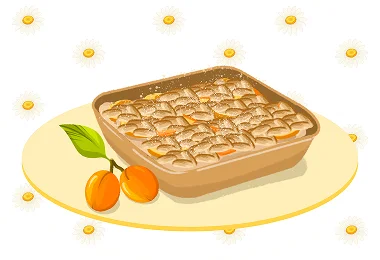
• Children see how the top has turned golden and crisp,
• Fruit is bubbling and soft underneath,
• The crumble has become crunchy on top and tender inside.
They help:
• cut small pieces (with support),
• place slices on plates,
• share with classmates or pack a piece to take home.
You can invite reflections:
• “What did you like more — making the crumble or arranging the apricots?”
• “How did the dough feel before baking and after?”
• “What does this pie smell like to you — summer, the garden, sunshine?”
Notes & Creative Extensions
• Use other stone fruits in season: plums, peaches, nectarines, or a mix.
• Let each child decorate a small individual crumble in a muffin cup or mini dish.
• Add a sprinkle of cinnamon for a warm aroma as summer turns into fall.
• Have children draw their pie: base, fruit, crumble — and label the layers.
• Link to science: talk about how heat changes fruit and butter (fruit softens, butter melts and crisps the crumbs).
Perfect For Educators
• Preschool teachers
• Kindergarten classrooms
• Early-childhood centers
• Montessori / Reggio Emilia programs
• Homeschooling families
• Cooking clubs
• Summer-to-fall transition themes
• Family workshops
Skills Developed:
sensory dough play, hand strengthening, grating (with supervision), layering and sequencing, fruit washing and cutting, early math through dividing dough, pattern creation, describing textures and smells, patience while baking, sharing and serving.








 ICONIER Digital Agency