Tasty Development
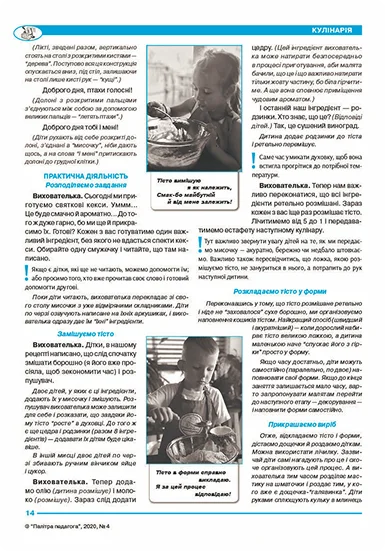
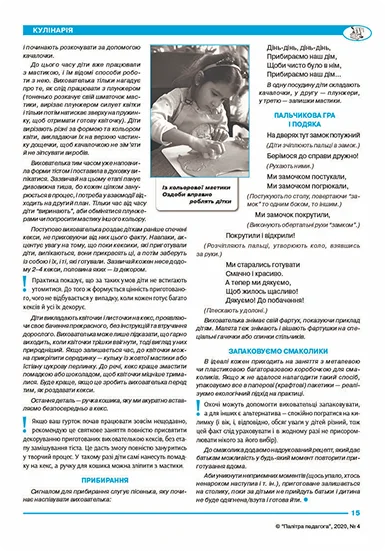
Originally published in the Ukrainian educational journal Palitra Pedagoga (2020, №4).
Author: Nataliia Kovalenko (now Prokopchik), lecturer in culinary creativity, Sacramento, CA, USA.
Key Insights
• Cooking as life, not just preparation
The kitchen becomes a natural place of growth. It is not “preparation for life” — it is life, joy, and learning all at once.
• Shared creativity and “quiet joy”
Children experience a special calm happiness when they are fully immersed in the process of cooking — kneading dough, decorating, or simply touching ingredients.
• Problem-solving through practice
Everyday tasks in the kitchen (reading a recipe, measuring sugar, dividing portions) naturally build math, reading, and organizational skills. Challenges are approached with “I can” rather than fear.


• Consistency and structure
Repeated rituals (songs, finger plays, tidy-up routines) help children feel secure and organized while keeping the atmosphere playful.
• Emotional and social growth
Group cooking nurtures patience, teamwork, responsibility, and empathy. Even shy or hesitant children become more confident and willing to help others.
• Teamwork and collaboration
Preparing dough together, dividing tasks, and decorating cakes as a group strengthens children’s sense of belonging and mutual support.
• Creativity and self-expression
Decorating cakes, inventing shapes, or using colored fondant allows each child to bring their own vision, turning the kitchen into an art studio.



ICONIER Digital Agency