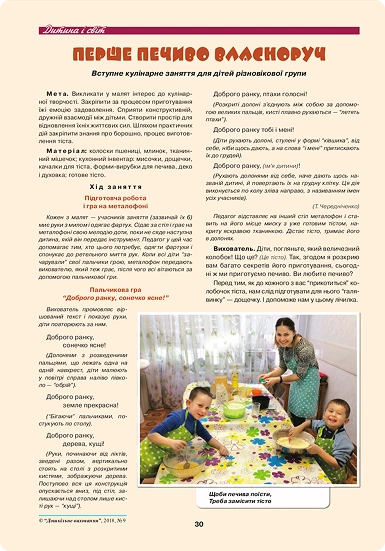
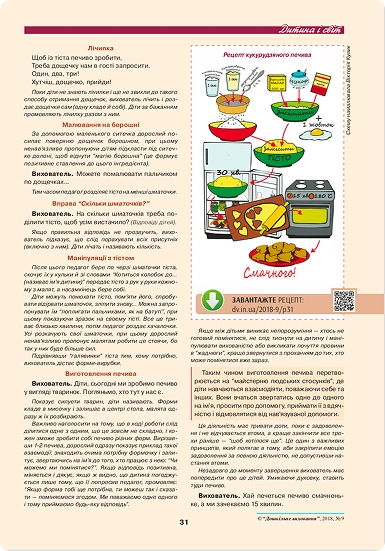
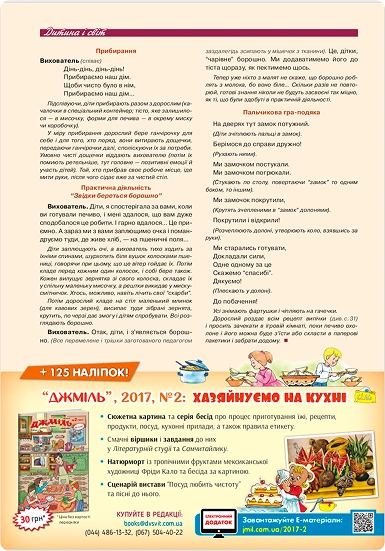
First Cookies Made by Children
1. Rituals and Emotional Readiness
• The class begins with a finger play and greeting song. Children clap, stretch, and move their hands, which helps them calm down from previous emotions and become fully present in the activity.
• This ritual teaches children to focus, feel connected to the group, and understand that they are starting something special.
2. Sensory Exploration
• Before baking, children explore flour through touch: sprinkling it, drawing on it, and feeling its softness.
• This creates a positive emotional connection to the ingredient and builds sensory awareness.


3. Interaction with Dough
• Children are encouraged to knead, roll, and shape dough.
• A small math element is introduced: dividing the dough into equal parts (“How many pieces do we need so everyone gets one?”).
• They also use cookie cutters to make animal shapes, which develops fine motor skills and imagination.
5. Clean-Up and Responsibility
• After baking, children and teachers clean up together.
• A short song makes tidying up enjoyable and ritualized, reinforcing the value of shared responsibility.
7. Gratitude Ritual
• The activity ends with a short verse of thanks, recited together.
• This final ritual teaches children the life skill of gratitude — for the activity, for each other, and for the shared experience.
4. Social Learning While Baking
• Baking becomes a “workshop of human relationships”:
• Children learn to ask each other for tools instead of grabbing.
• They practice calling each other by name.
• They accept or decline help respectfully, and express gratitude when receiving it.
• In this way, the kitchen turns into a training ground for empathy, cooperation, and respect.
6. Practical Experiment: Where Flour Comes From
• The teacher introduces a mini experiment: children hold real wheat stalks, remove grains, and grind them in a small hand mill.
• This tactile experience helps children understand the long journey from grain to flour, and value bread as the result of real work.
• It also deepens respect for food and the effort behind it.
Key Insight
Through this activity, baking cookies becomes much more than cooking. It transforms into a holistic learning experience where children:
• explore with their senses,
• practice math and motor skills,
• develop empathy and cooperation,
• learn responsibility,
• and gain respect for food and human effort.


ICONIER Digital Agency