

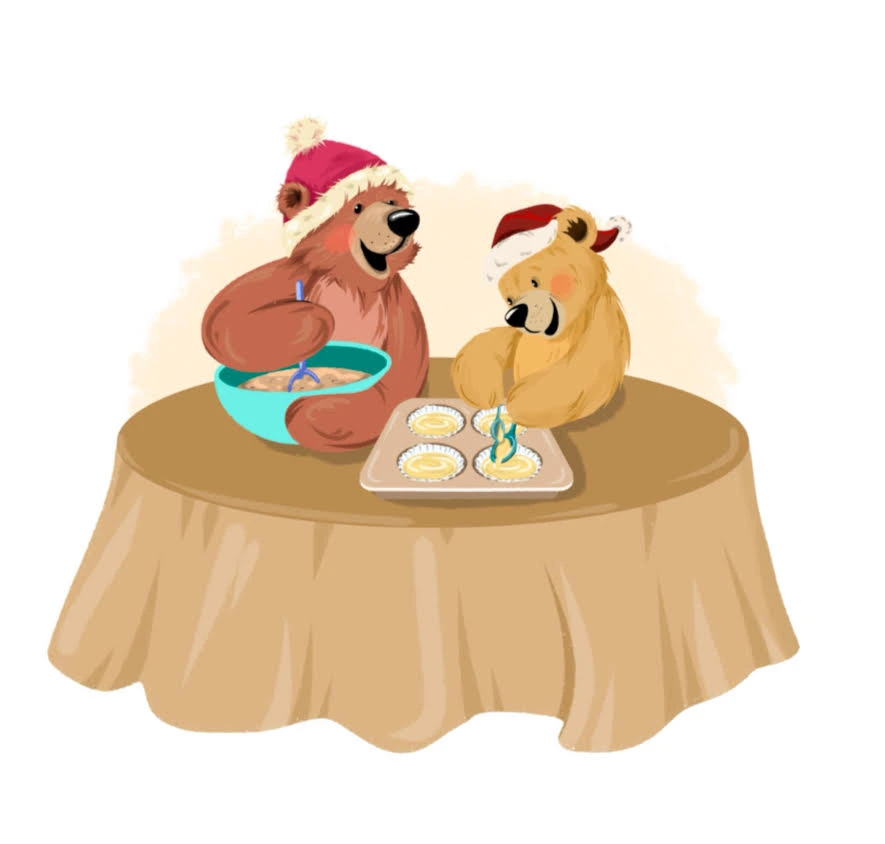
The Winter book didn’t start from scratch. It was built on the lively, ongoing experience of cooking classes with children, where recipes were tried, tested, and loved. That’s what made the process simpler—and so much warmer.
Every recipe in this book has been tested over time. For the past ten years, I’ve been making them with children in my cooking classes. We baked the same pies, cookies, and cakes again and again with different groups of kids. I saw that these recipes not only worked but were truly loved by little chefs. That’s why only those dishes made it into the book.
A special stage for me was the four years I spent in Sacramento, where I worked in two preschools. During that time, I created a whole photo-album of our cooking projects with recipes and pictures. At first, it was just a memory album, but later it became an important source of inspiration for the book.
Whenever I sent recipes to Anastasiia, I attached photos of children cooking from that album—how they held a spoon, how they decorated cookies… These details helped her imagine the Bear family in action. The illustrations, in many ways, grew out of real practice: they reflect genuine children’s emotions and movements.
Of course, I also considered the seasons. For winter, I chose simple yet festive recipes that create an atmosphere of coziness and celebration. Many of them are the perfect alternative to store-bought pastries: easy steps, accessible ingredients, and results that inspire kids to believe they can make something delicious themselves.
But winter recipes aren’t only about baking. Some of them are designed for decorating and creative play. For example, there’s a recipe for chocolate Christmas trees—you “draw” them with melted chocolate, then use them to decorate a holiday cake or cupcake. These kinds of recipes invite children to see cooking not just as making food, but also as a way to create, decorate, and express themselves in their own unique style.
There are also recipes that go beyond being “better than store-bought.” A festive brownie, for instance, is made with brown rice flour and avocado, while an almond loaf relies on almond flour—both delicious and more wholesome than the usual versions. These recipes show that treats can be both fun and nourishing.
And then there are the timeless ones—the cookies you can bake any time of year, or the loaf cakes that serve as a base for endless variations. Swap in different seasonal fruits or berries, and you have a whole new flavor. That’s what makes them such family favorites: simple, flexible, and always welcome.
There are a few other details, too:
- In the Winter book, all recipes are measured with cups and spoons. That makes the process very child-friendly—no intimidating big numbers. Kids especially love leveling off flour or sugar with their little fingers, almost like trimming it, while also touching and exploring the texture. Measuring liquids is just as easy and fun. Because the steps are simple and the ingredients familiar, these recipes also make a natural, confidence-building way for children to start learning how to cook.
- Even though the recipes call for sugar, I often encourage parents to try healthier options—like an erythritol and monk fruit blend (easily found in the U.S.) or brown or coconut sugar. There’s even one recipe sweetened with honey.
 That’s why the Winter book became more than just a collection of recipes. It is a gathering of real stories, experiences, joy, and trust that grew in my classes year after year—and even inspired every single illustration inside.
 ICONIER Digital Agency